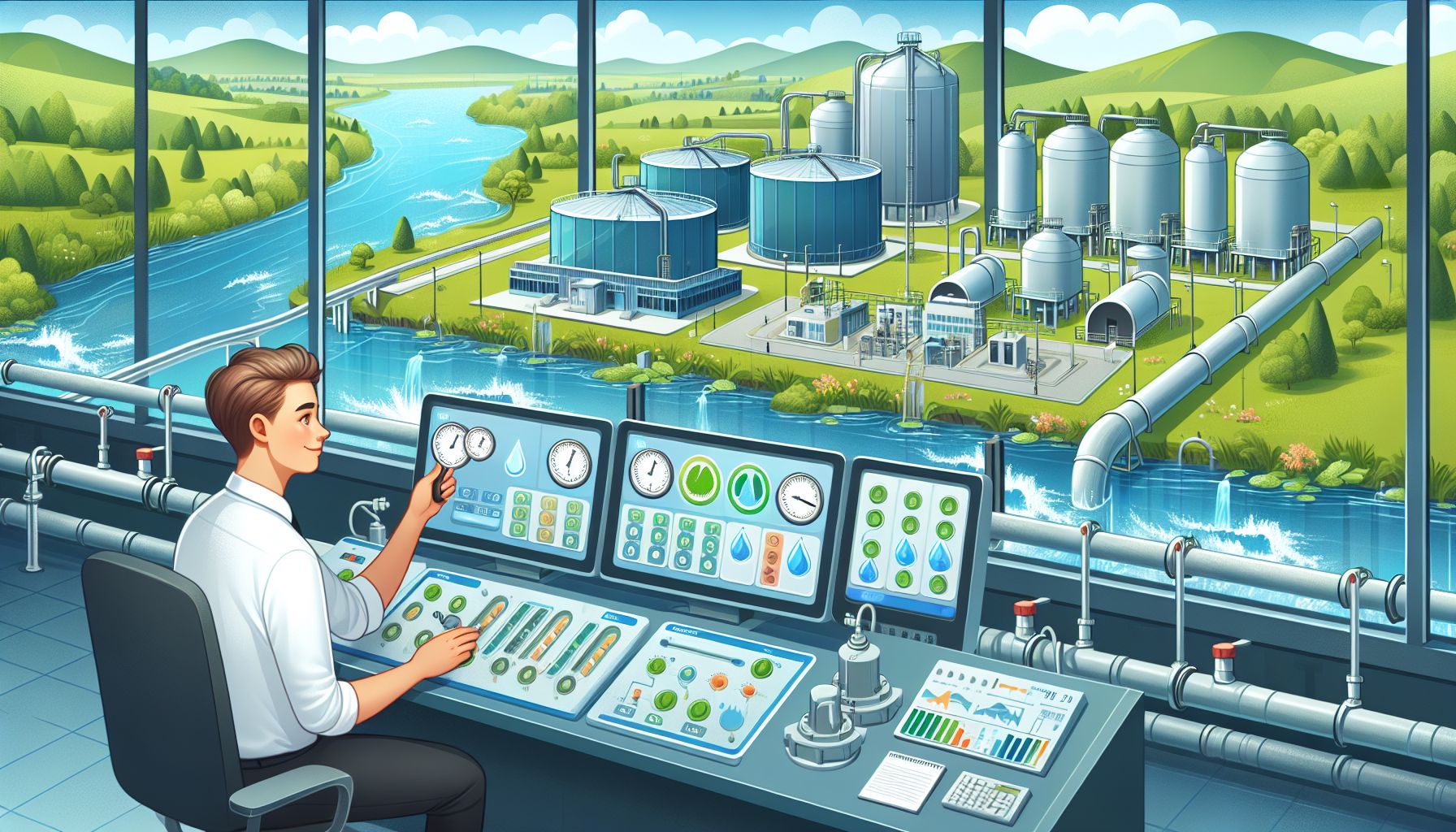
Water and wastewater management constitutes a critical part of public health and environmental protection. The processes are integral to maintaining the quality of the drinking water supply and safeguarding bodies of water from contamination by domestic and industrial wastes.
What is Water Management?
Water management involves a host of activities, including collecting, treating, and distributing water to consumers. It’s a complex system with interconnected components, necessitating a strategic approach. Freshwater has to be sourced from rivers, wells, springs, or reservoirs. It is then treated to remove any contaminants, thereby making it safe to drink. Once treated, the water is pumped through a network of pipes and storage tanks to reach consumers.
Water Treatment
Before it is deemed fit for human consumption, water has to undergo several key processes at a treatment plant. Initially, the incoming water is subjected to ‘coagulation and flocculation’, where chemicals are added to the water that bind with the dirt and other particles present, forming larger particles (‘floc’).
The water then proceeds to a ‘sedimentation’ stage, where these larger particles sink to the bottom due to their weight. In the ‘filtration’ stage, the clear water on top passes through systems that remove any remaining particles. Additionally, in the ‘disinfection’ phase, the water is treated with chemicals or UV light to kill any bacteria or viruses that could still be lurking in it.
Wastewater Treatment
Wastewater treatment is the process of converting wastewater – water no longer needed or suitable for its most recent use – into an effluent that can be either returned to the water cycle with minimal environmental impact or reused.
The process begins with ‘primary treatment’ where large solids and heavy particulates are allowed to settle to the bottom and are removed. The resulting fluid then undergoes ‘secondary treatment’. Bacteria and other microorganisms are introduced into the water to consume the waste and break it down into simpler compounds.
Finally, ‘tertiary treatment’ involves polishing the water by removing the remaining suspended solids and disinfecting it before reintroduction into the environment.
Environmental Impact & Legislation
Treating and managing water and wastewater has a significant environmental impact. Effective processes reduce the volume of waste discharged into rivers, lakes, and oceans, thereby protecting these resources and the species that inhabit them.
In the United States, the Environmental Protection Agency (EPA) regulates these activities under various acts and guidelines. The Clean Water Act, for example, sets forth wastewater standards for industry, while the Safe Drinking Water Act governs the quality of the country’s drinking water.
The Role of Technology in Water and Wastewater Management
In an age of rapidly evolving technology, there is significant potential for the industry to improve efficiency, reduce costs and mitigate environmental impact. Developments in areas like AI, machine learning and remote sensing are paving the way for more efficient and resource-saving methods in water and wastewater treatment. These innovations can optimize treatment processes and provide quicker and more accurate methods of detecting leaks, predicting equipment failures and managing water distribution networks.
For more industry-specific knowledge and articles, visit WaterandWastewater.com. It is an online resource that provides information, provides valuable insights, and keeps industry professionals updated on the latest news and developments.
Conclusion
Water and wastewater management are essential activities that keep our cities running and our environments clean. These processes, though they happen behind the scenes, significantly contribute to public health, environmental conservation, and sustainable development. With the advent of new technologies and the continuous refining of existing processes, the future of this vital service looks promising.