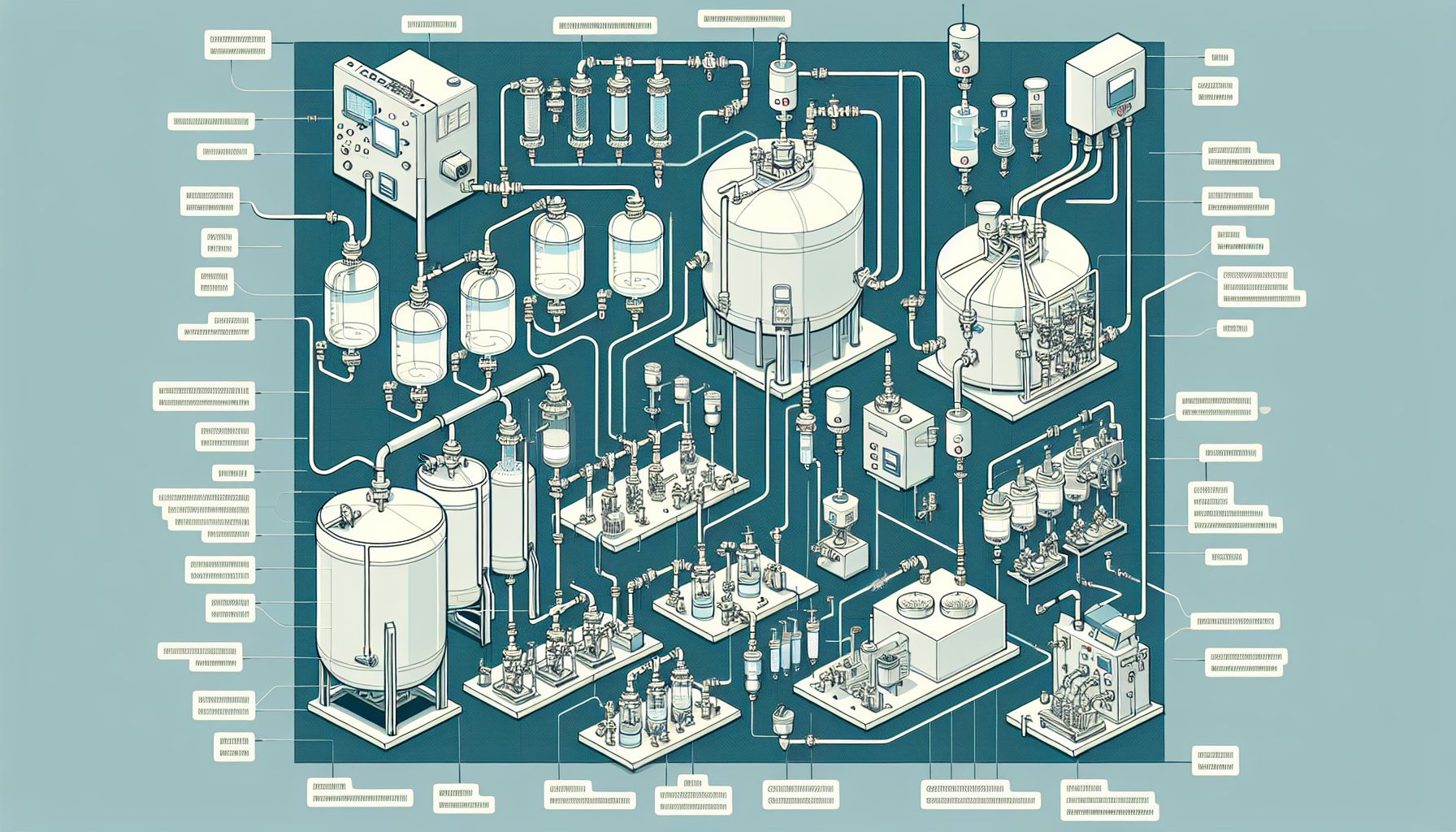
In industrial water treatment processes, it is crucial to understand the dynamic characteristics of the chemical dosing systems used for treatment. Applying effective evaluation strategies can enhance the accuracy and efficiency of system operations, leading to improved water quality and cost-effectiveness in operation. This article focuses on evaluating different design alternatives for chemical dosing systems.
Understanding Chemical Dosing Systems
In a chemical dosing system, the objective is to integrate proportioned amounts of a particular chemical additive into a water stream at a specific flow rate. Accurate control over chemical injection quantity and rate is crucial in maintaining effective treatment and preserving equipment longevity.
Several factors may influence the design and performance of a chemical dosing system, such as flow rate, dosing pump capacity, chemical nature and concentration, pressure conditions, and the type and location of the dosing point.
Assessing Dosing System Configurations
During system configuration assessment, one must consider the design parameters that suit the specific needs of the system, such as storage capacity, pump selection, safety measures, and control systems.
For instance, storage tanks must have the capacity to contain the necessary volume of chemical additive. Choosing the appropriate dosing pump size and type – be it diaphragm, peristaltic, or piston-type – is also paramount to maintain optimal system performance.
Stability, Accuracy and Safety Evaluation
Stability, accuracy, and safety form the trifecta against which chemical dosing system evaluation criteria are measured.
System stability is typically evaluated by observing the consistency of the chemical dosage over a designated period of time. Deviations from the desired stability parameters often mandate a reassessment of the system design or operational methodology.
As for accuracy, it pertains to the system’s ability to deliver the exact, pre-set chemical dosage. Defense in depth strategy is a useful method for evaluating safety measures. This includes analyzing the risk of chemical spills, leakage, and overall system failure.
Evaluating Operational Efficiency
Another crucial aspect to consider while evaluating different design alternatives is the operational efficiency. This can be delineated based on factors such as energy consumption, chemical use efficiency, maintenance and repair costs, and useful life expectancy of the system.
An efficient dosing system minimizes waste by ensuring precise chemical delivery. This eliminates the concern about the overuse of treatment chemicals, resulting in cost-savings. Reducing energy consumption lowers operating costs and improves overall lifecycle cost analysis. Efficient systems also cut down on maintenance and repair expenses by demonstrating reliable performance.
Consideration of Redundancy and Flexibility
Redundancy and flexibility in dosing system design can help anticipate potential operational issues, significantly mitigating potential risks. For example, integrating standby pumps can ensure system functionality during maintenance or repairs.
Flexibility lets the system adapt to a range of operating conditions, such as fluctuations in flow rate or variations in chemical concentrations. Therefore, considering this aspect during the evaluation phase is crucial.
Conclusion: Navigating the Evaluation Process
In conclusion, a systematic evaluation of chemical dosing system design alternatives ensures effective functionality, accuracy, safety, and efficiency. Key factors such as stability, accuracy, safety measures, operational efficiency, and system flexibility should be the focus of this evaluation process. Further in-depth analysis can be found in resources from US EPA and educational institutions like Stanford University.