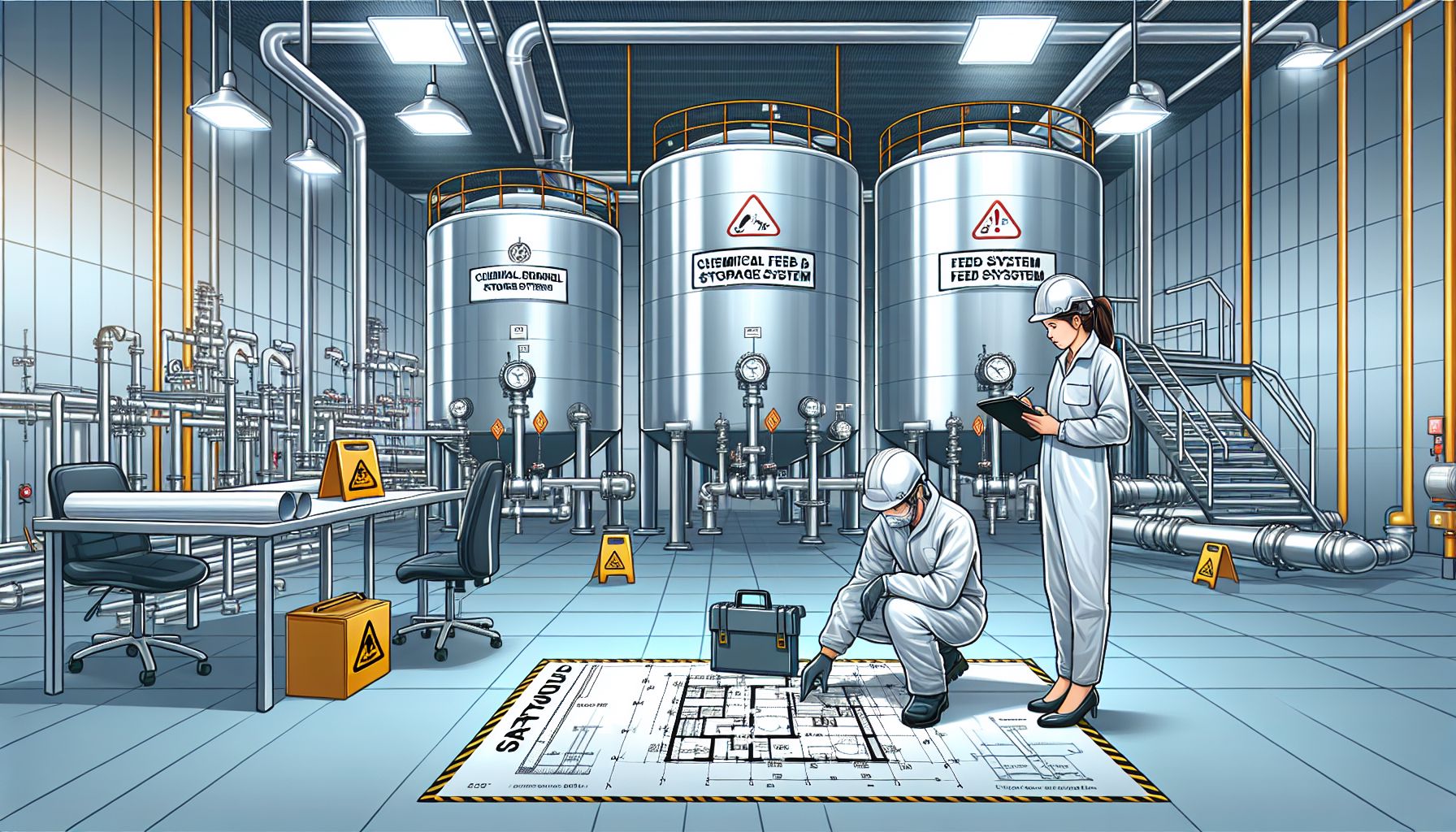
Safety audits are essential elements in maintaining a safe and healthy environment in industries dealing with chemical feed and storage systems. This process involves assessing and examining the existing and potential hazards of these systems to effectively manage and minimize the risks they can generate.
The Importance of Safety Audits
Safety audits provide various benefits. Firstly, they help identify hazards that may cause accidents or occupational illnesses. This supports the establishment of an effective control and prevention strategy. Compliance with the hazard communication standards of the Occupational Safety and Health Administration (OSHA) is another significant role that safety audits play. Furthermore, these audits foster a culture of safety within the company, reducing the potential for costly accidents and fostering employee morale and productivity.
The Process of Conducting a Safety Audit
Audits for chemical feed and storage systems are carried out systematically. They often start with a review of system documentation, including but not limited to operating procedures, training records, and maintenance logs. The auditor then conducts walk-through observations to identify physical and procedural hazards.
In the next step, the auditor communicates his findings, often ranking them based on the severity of risk. Recommendations for improvements are then made, aiming to eliminate or mitigate hazards. Finally, follow-up audits are conducted to ensure that the recommended changes have been implemented and are effective.
Common Issues Found During Chemical Feed and Storage System Audits
There are several issues typically identified during safety audits. These may include a lack of proper training for employees, inadequate maintenance of equipment, insufficient hazard identification and control, and poor adherence to safety procedures. Properly addressing these issues significantly reduces the potential for accidents.
In particular, inappropriate or poorly maintained equipment in chemical feed and storage systems can lead to leaks or catastrophic failures. Therefore, regular system checks and prompt replacements or repairs of faulty components are crucial.
Measures to Address Safety Risks
Implementation of safety measures is vital following identification of hazards during the safety audit. For instance, companies should provide adequate training to their workers. They need to be knowledgeable about the hazards related to each substance they handle and the proper procedures to mitigate those risks. An effective hazard communication program should be developed, clearly marking containers and areas where hazardous chemicals are present.
Another measure to address safety risks could be an upgrade in the design and operation of chemical feed and storage systems. For instance, the use of secondary containment systems can prevent leaks from reaching the environment. This protects both the workforce and the surrounding community from potential exposure.
Moreover, companies should endeavor to ensure regular equipment maintenance. This reduces downtime due to unforeseen repairs and keeps the company compliant with safety standards.
Operational Considerations for Safety
Proper operation of chemical feed and storage systems includes monitoring for leaks or other abnormal conditions, regular system checks, and adequate employee training. Furthermore, planning for emergencies, including providing personal protective equipment and implementing evacuation plans, can significantly mitigate harm in the event of a catastrophic failure.
In addition, factors such as the potential for environmental impact and the geographical location of the facility can affect the operation of chemical feed and storage systems. For instance, areas prone to natural disasters may require additional safeguards to prevent harm in the event of an earthquake or flood.
Conclusion
Safety audits for chemical feed and storage systems are integral components of any company’s safety protocol. They play crucial roles in identifying, controlling, and preventing potential hazards. It is critical for companies in this industry to take proactive steps in observing these audits and implementing the suggested safety measures, showing their commitment to maintaining a safe and healthy workspace.